
Fujifilm X-T2 Review & Best 10 Alternatives
There will probably always be photographers who don’t like mirrorless cameras and can’t imagine not hearing the clack of the camera mirror after every press of the shutter button. But if you don’t count yourself among them, you should be excited about the Fujifilm X-T2, a popular mirrorless camera with an innovative autofocus system that makes it perfect for action photography.
The X-T2 has quickly become popular among the owners of other Fujifilm cameras because it’s compactible with the extensive range of high-performance interchangeable lenses from the company. It doesn’t matter if you’re into street photography, landscapes, or you shoot weddings for a living, with the right lens, the X-T2 can do it all.
Inside the Fujifilm X-T2 is the 24.3MP APS-C X-Trans III CMOS sensor, which was introduced by the company in the X-Pro2. It offers an incredible ISO range of 200-12,800. This range can be expanded to 100-51,200, and you can enjoy it even when capturing RAW images.
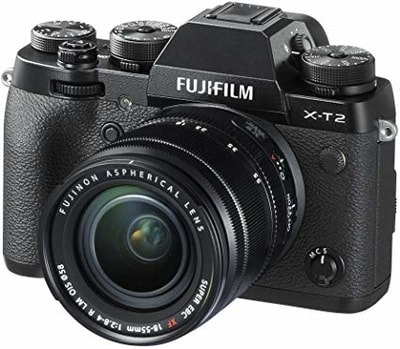
The camera’s new autofocus mechanism uses improved algorithms to better handle low-contrast objects and subjects with delicate details, like bird feathers and animal fur. If you’re used to composing pictures using a viewfinder, you’ll be pleased to know that the viewfinder on the X-T2 has a magnification ratio of 0.77x, helping you become one with your camera.
Pros: Fast and reliable autofocus. Large electronic viewfinder. Great low-light performance. Ergonomic design.
Cons: Doesn’t support touch input.
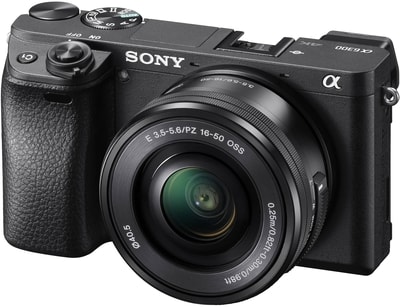
The Sony Alpha a6300 is a well-rounded camera with interchangeable lenses and a high-quality viewfinder. Its autofocus is so fast that you can take it with you to a sports game and capture action as if you had the ability to freeze time. It records razor-sharp 4K video, and it comes with an audio port, allowing you to connect a professional microphone to record high-quality audio. When shooting portraits, it’s important to keep the subject’s eye in focus, but that’s not something you have to worry about with the Sony Alpha a6300 thanks to its Eye AF focus mode, which keeps steadfast tracking on the eye of a moving subject.
Pros: Reliable autofocus that you can depend on. 4K video recording capabilities with a dedicated audio input.
Cons: Doesn’t have a touch-enabled display.
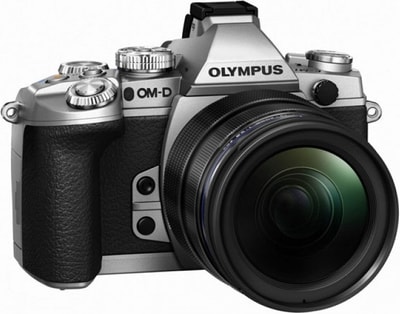
The Olympus OM-D E-M1 is a weatherproof mirrorless camera with a high-resolution viewfinder, a 20 MP sensor, and TruePic VIII processor, which promises faster burst mode, lower response times, and greater battery life. Unlike many other similar cameras on the market, the Olympus OM-D E-M1 has two memory card slots. The two slots come in handy when you go on a long holiday and want to capture hundreds of pictures and take advantage of the camera’s 4K video recording capabilities as well.
Pros: Weather resistant. Records 4K video. High-resolution viewfinder. Two memory card slots.
Cons: Its menus are quite hard to navigate.
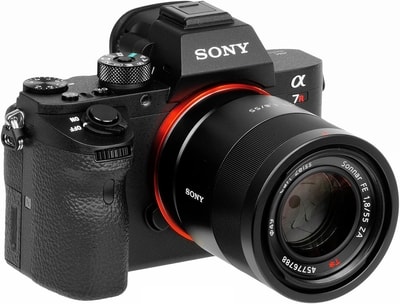
Sony has shaken up the DSLR market with the a7R II, a professional DSLR with a back-illuminated full-frame image sensor with 42.4 MP and ISO up to 102400. This is not the right camera to buy for selfies and holiday adventures. The a7R II is a serious DSLR alternative with impressive autofocus performance and features that make it well worth its price. There’s also a newer version, the a7R III, which has many improvements over the a7R II but also costs quite a bit more.
Pros: Ridiculously high resolution. Durable body. 4K video recording capabilities. Excellent ergonomics.
Cons: Convoluted user interface that could use some streamlining.
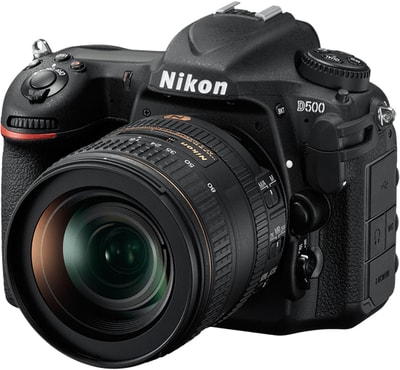
If you think that compact DSLR cameras are unfit for professional use, think again. The Nikon D500 features a brilliant autofocus system and an optimized image sensor with 20.9 MP and support for 10 FPS continuous shooting. With its built-in Wi-Fi and Bluetooth connectivity, the camera can communicate with most devices wirelessly, allowing you to transfer images and videos for post-processing even when you don’t have a cable nearby.
Pros: Professional features in a compact body. 10 frames per second continuous shooting. Extensive connectivity options.
Cons: Basic touchscreen control.
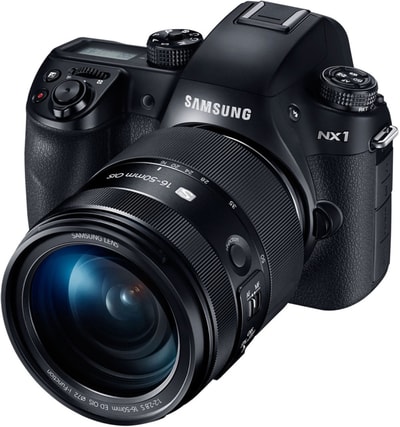
The NX1 from Samsung is a beast. It’s equipped with the most powerful image processor Samsung has ever made. Thanks to its state-of-the-art processor, the NX1 can focus in 0.055 seconds using 205 phase detection AF points. It can continuously shoot up to 15 frames per second at 28 MP, and it takes the camera just 0.0005 seconds to display a captured image on its OLED display. If you also consider that it can shoot at up to 1/8000 sec, it becomes easy to see why the NX1 is such an amazing camera for action photographers and videographers.
Pros: Extremely fast response times. Perfect for action photography. Color-accurate OLED display.
Cons: Third-party accessories are not as readily available as they are for Canon and Nikon DSLRs.
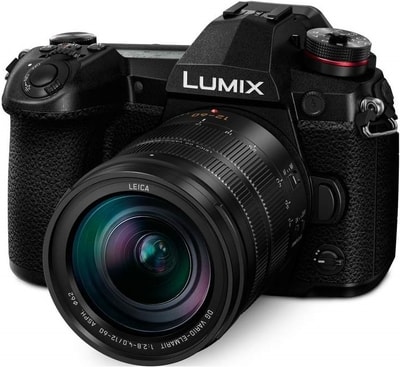
Just a few years ago, it would be unthinkable to buy a camera that can shoot up to 80 MP RAW images and costs only $1,299. But thanks to Panasonic and the G9 mirrorless camera, you can do just that and more. It’s 20.3 MP sensor supports a special high-resolution mode that 80 megapixels in RAW recording by shooting the 20.3-megapixel sensor 8 times to create a single image. The results can be mesmerizing. The camera can also record 4K video at 60 frames per second or Full HD video at up to 180 frames per second, allowing you to slow down time and reveal what the naked eye can’t see.
Pros: Extraordinarily high image resolution. Two memory card slots. 4K at 60 FPS and Full HD at 180 FPS.
Cons: The high-resolution mode works as advertised only with a tripod.
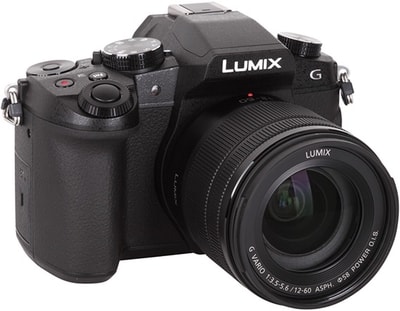
DSLRs are impressive, but they’re also bulky and inconvenient. Panasonic knows this, and the G85 is the result of its effort to create a compact 4K video-enabled Micro Four Thirds Mirrorless (DSLM) camera with class-leading 5-axis body stabilization and interchangeable lenses. The G85 is sealed against bad weather conditions, and it delivers true-to-life photo image quality at an affordable price.
Pros: Effective optical image stabilization. Interchangeable lenses. 4K video capture. Great ergonomics.
Cons:Only 16 MP resolution.
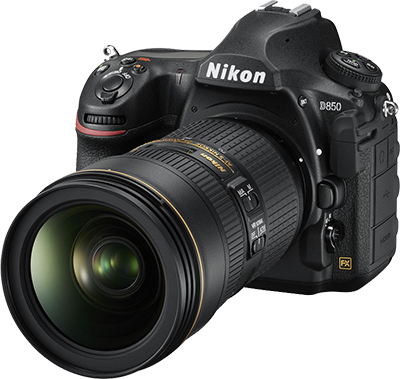
Nikon D850 is a pretty versatile full-frame camera that is capable of high-resolution imagery. It boasts a 45.7 MP back-side illuminated CMOS sensor that produces images with the best lighting and naturally vibrant colors.
This camera processes images at lightning speeds with its Expeed 5 Image Processor, which also allows up to 9 fps of high-speed capturing. Even in the most challenging scenes, the D850 can catch the finest details, light, shadows and an incomparable value thanks to low-base ISO 64.
The Nikon D850 allows both XQD and high-speed SD cards, both capable of high storage limits. In addition, it works with NEF Files which are basically RAW files that allow more freedom during post-processing, unlike JPEGs which are limited to 8-bits.
What makes this camera a fascinating choice for both amateur and professional photographers is its unparalleled 152-point focusing system which is great for outdoor and wildlife photography.
Lastly, its battery life is just too good to ignore, rated for at least 1840 shots and more than 100 hours of video recording.
Pros: It’s made with durable high-quality magnesium alloy and its design is very ergonomic. Dual memory. 8256 x 5504 max resolution. Capable of recording 4k videos.
Cons: Requires high-speed SD card.
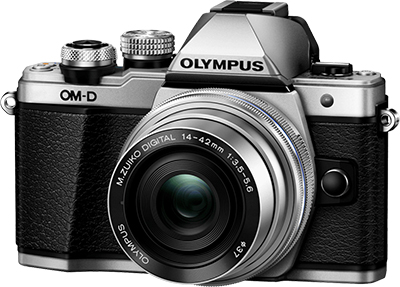
The Olympus OM-D E-M10 Mark II is really one of the great additions to the OM-D line. In fact, it sold better than the other OM-D models.
It’s a 390-gram compact micro four-thirds mirrorless camera that a photographer should have in his arsenal. It’s also quite a bang for the buck with prices starting at $650. But, despite its relatively lower price, it still has the features that the pricier OM-D models and other professional cameras.
What’s more, this camera is known for its 4k video timelapse mode. It also has a 16 MP LIVE MOS sensor which is enough to deliver great quality images. In addition, it has a superb 5-axis stabilization system that significantly reduces unwanted shaking, blurs and unintended movements.
The Olympus OM-D E-M10 Mark II uses SD, SDHC or SDXC memory cards that can easily be accessed with third-party applications for repairs, formatting and recovery. To make things better, with this camera, you’ll have access to a tilting touchscreen display and WIFI.
Lastly, this camera is also perfect for amateur photographers and those who are learning the ropes of photography since it’s simple to operate and it won’t burn a hole through your pockets.
Pros: Ergonomic design, comfortable grip, and light. Built-in flash. Capable of 8.6 fps rapid photo capturing.
Cons: No weatherproof sealing.
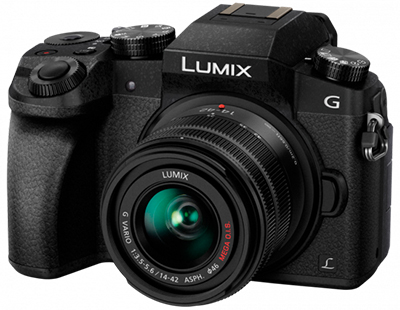
The Panasonic Lumix G7 is a midrange mirrorless DSLR that is more compact in size weighing in at only 410 grams. Like the Olympus OM-D E-M10 Mark II, this camera also has a touchscreen display.
It also captures photos with 16.9 million pixels which is pretty decent for a mid-range DSLR. But, one amazing thing about this camera is its ability to record 4k (UHD) videos, which is something you’d expect to get paying for a $2000 to$2500 camera like the Panasonic HC-X1, which is 5x pricier than the Lumix G7.
What makes the Panasonic Lumix G7 an excellent purchase at $597 is its attractive features. It has a 16MP Four Thirds CMOS sensor that’s designed to squeeze professional photo modes in this compact model, eliminating the need for extra and bulky equipment like a full-frame DSLR.
In addition, this compact model also takes advantage of its digital display and Wi-Fi capability by allowing its user to transfer images on the go, with just a single touch and without any cables.
The Panasonic Lumix G7 can also be used for remote shooting which means that you can prompt the camera to take a shot from another device as long as it’s connected to the internet. Not to mention, this camera is compatible with a SONY SD Card, which is one of the top choices when it comes to memory solutions because of their high 180N rating.
Pros: It has a 4K Photo Mode, 30p max resolution and its viewfinder can magnify up to 0.70x.
Cons: Uses UHS-II SD cards which are slower than newer SDR104.
The Fujifilm X-T2 has many positive qualities and only a couple of negatives. However, there are many other similarly feature-packed cameras that are worth considering. In this article, we’ve listed the top 10 best alternatives to the X-T2 that we could find, along with their pros and cons. When buying a camera, you should remember that you’re buying into a whole ecosystem, especially if the camera has interchangeable lenses. So, do your research and pick something that fits your needs.